
When a pressure-compensated hydraulic vane pump needs replacing, the series name alone is rarely enough to identify a suitable unit. Two pumps can be described as “variable vane pumps” and still differ in pressure adjustment range, output at the required speed, rotation, mounting pilot, shaft, port threads or drain arrangement. A replacement quote is useful only when those details have been checked against the actual machine.
If you already know how a variable vane pump works, go straight to the checklist below. For an introduction to the mechanism, see our variable vane pump guide. This article focuses on the information needed to compare an existing pump with a proposed replacement.
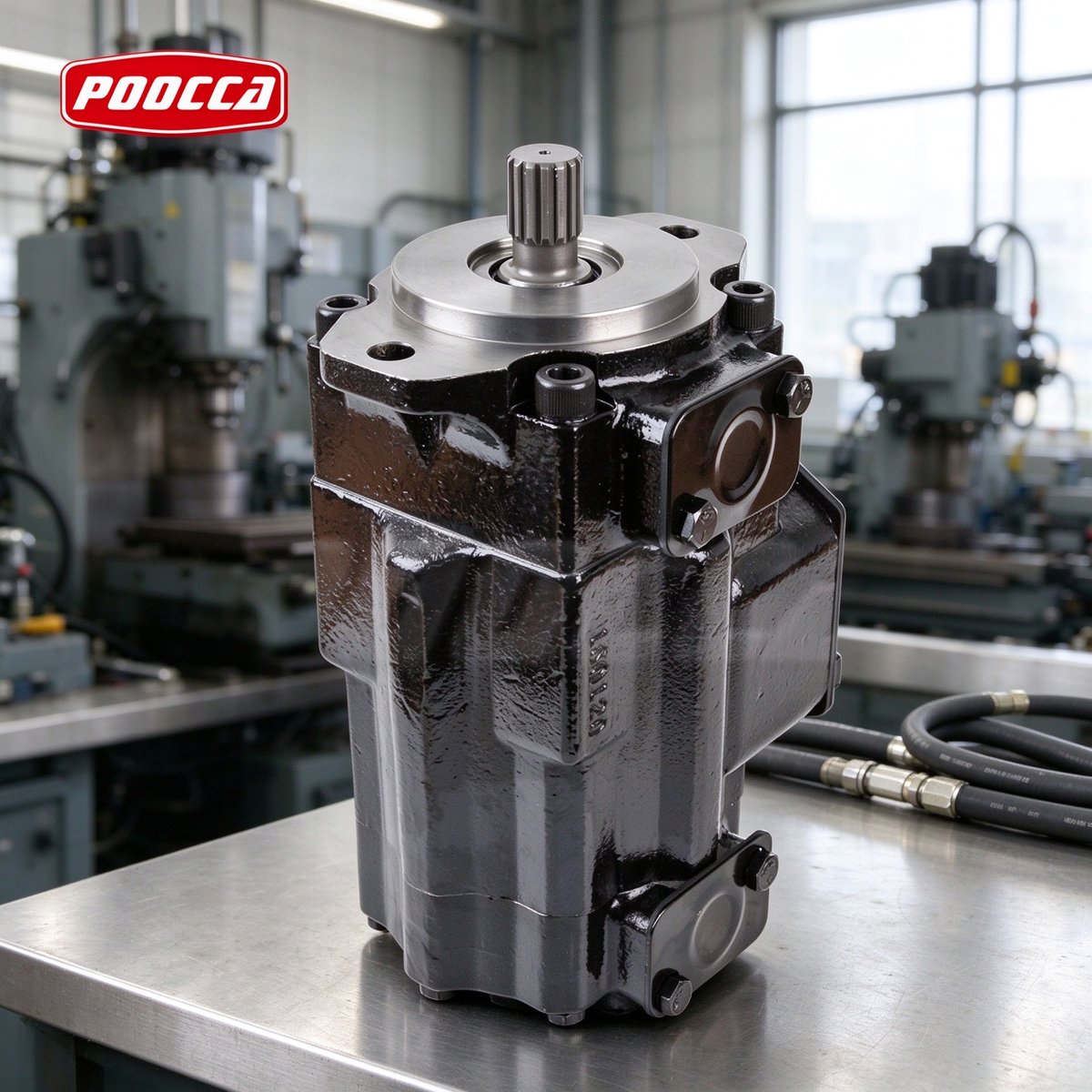
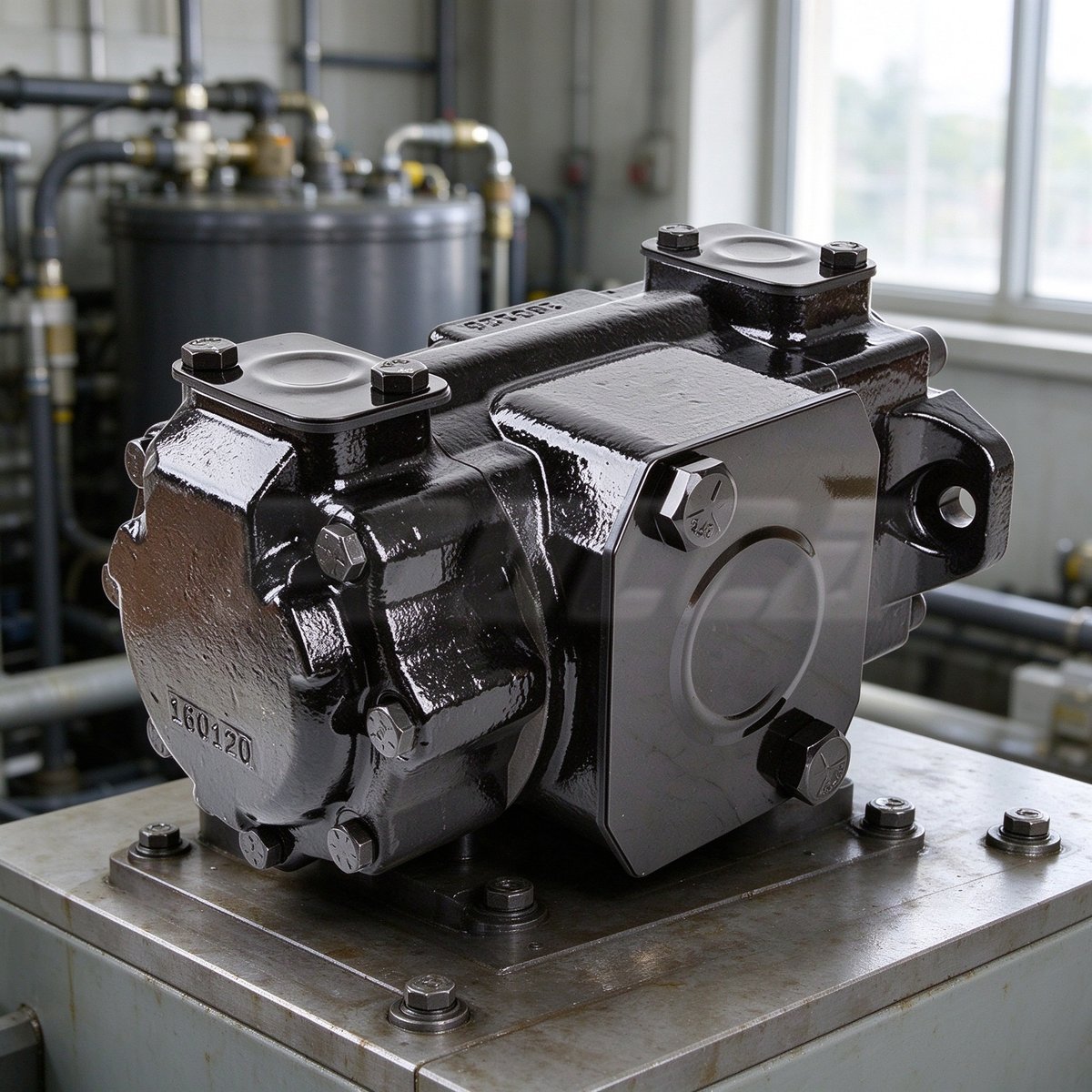
A POOCCA vane pump. The drive shaft, mounting flange and nameplate are the first reference points when a replacement is being compared.
Start With the Complete Model Code
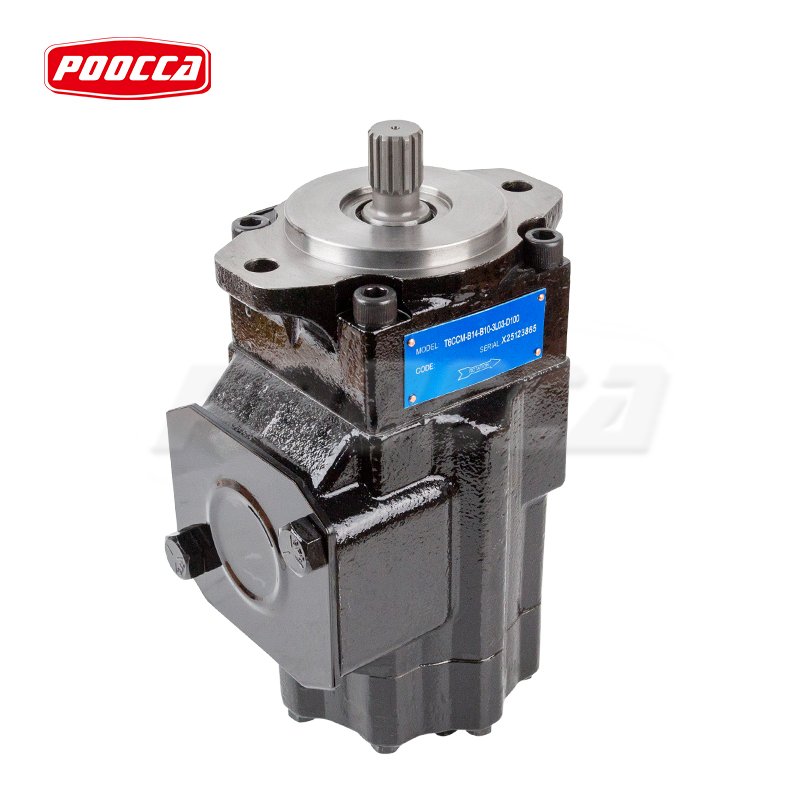
Photograph the nameplate before the old pump is removed, if it is safe and accessible. Copy every letter, number and suffix exactly as marked. The code may distinguish a pressure class, rotation direction, mounting design or optional shaft and seal configuration. Do not leave off a suffix because the main series number looks familiar.
For example, the Yuken PVV20 series technical sheet distinguishes pressure classes and design modifications within the same series. It also shows that pilot and shaft dimensions can change with the H01 and H04 suffixes. These are Yuken reference details, not specifications for a POOCCA pump or proof that another pump is interchangeable with it.
If the nameplate is missing or unreadable, send clear photographs of the complete pump, any cast or stamped markings, the shaft end, mounting face, control section and all ports. Add measurements only where they can be taken safely, and label the units. An estimate based on appearance is less useful than an item marked “unknown.”
If the pump on the machine is a double (tandem) vane pump — two pumping sections in one housing, often supplying two separate circuits — record the model code of each section, not just the combined housing code. Two sections can carry different displacements, and one section may be pressure-compensated while the other is fixed-displacement. A single-section replacement cannot be ordered from a double-pump nameplate without identifying both sections.
Match the Pressure-Control Requirement
A pressure-compensated vane pump reduces its delivery as the circuit reaches the compensator setting. The relevant questions are therefore more specific than “What is the maximum pressure?”
- What pressure adjustment range does the existing model use?
- What is the machine’s normal operating pressure, and at what point should the pump reduce delivery?
- Is there a separate flow adjustment or another control feature?
- Does the replacement configuration have documented settings or a performance curve for the required duty?
Use the exact pump or machine manual to identify the required range. Do not substitute a pump merely because its maximum pressure rating appears high enough. The control behavior must suit the circuit, and settings should be confirmed under the applicable service procedure.
Compare Flow at the Actual Drive Speed
Record the electric-motor or prime-mover speed and the required delivered flow. A catalog’s displacement, nominal flow and measured discharge flow are different quantities. Displacement multiplied by speed gives a theoretical flow; the delivered flow depends on the pump’s operating point and its adjustment. For a pressure-compensated model, flow may intentionally decrease as the set pressure is approached.
When comparing candidates, ask for the proposed pump’s flow information at the relevant speed and pressure. Do not treat a no-load flow figure as a promise of delivered flow at working pressure. If the equipment has a required cycle time, include that requirement in the inquiry.
Check Rotation, Mounting and Shaft Together
Confirm rotation as viewed from the shaft end, because stating only “clockwise” without a viewing direction can cause confusion. Compare the mounting style, pilot diameter, bolt pattern and shaft type and dimensions. Check the coupling as well as the pump: a shaft that seems similar may still have a different diameter, keyway or engagement length.
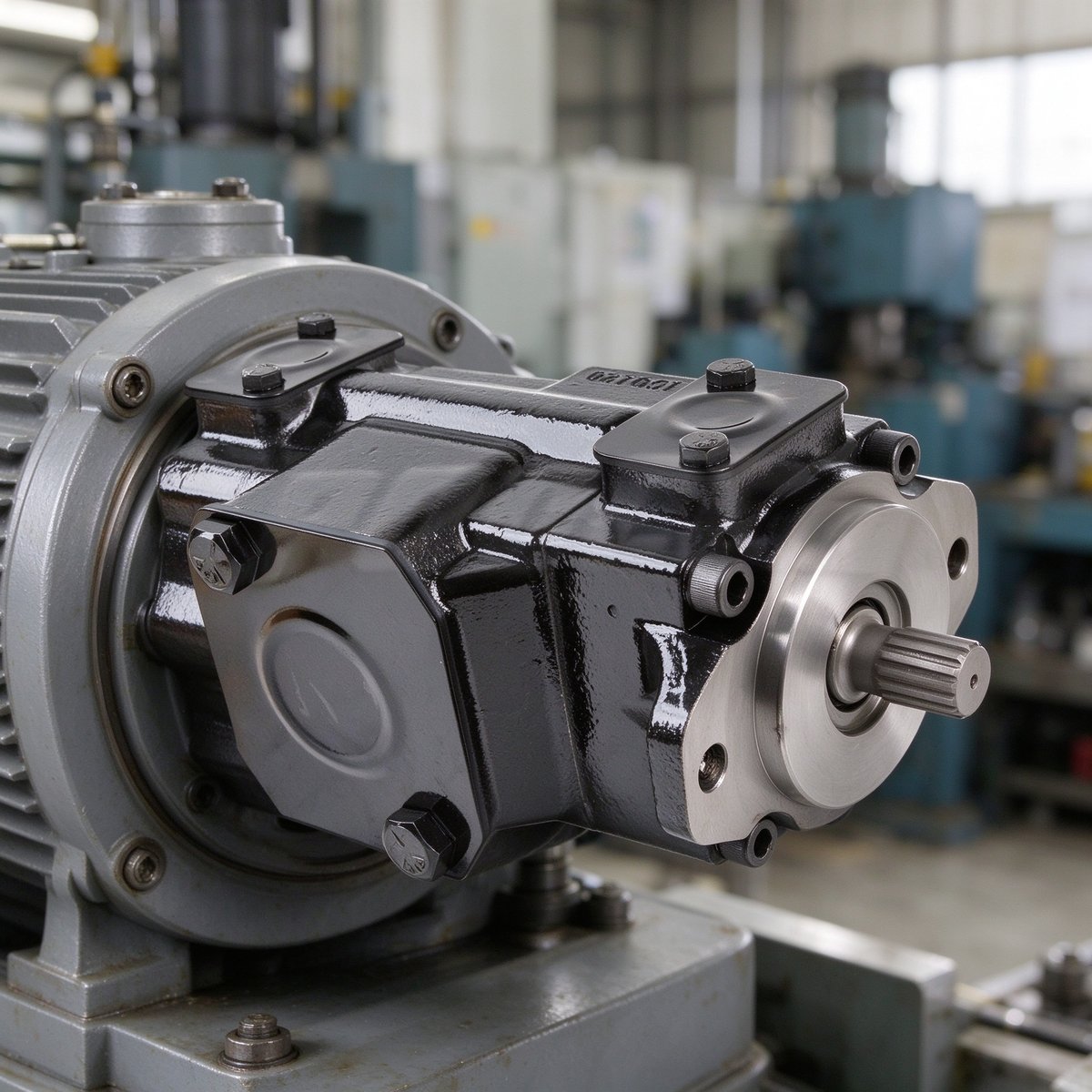
The replacement must fit the machine and operate in the correct direction. Do not infer mechanical interchangeability from similar product photographs or a matching flow class.
Identify Every Port and the Drain Arrangement
Document the suction and discharge ports, their thread or flange type, location and available hose clearance. If the pump has a case-drain connection, identify its location and the original drain routing. A drain port must not be mistaken for an inlet or pressure port.
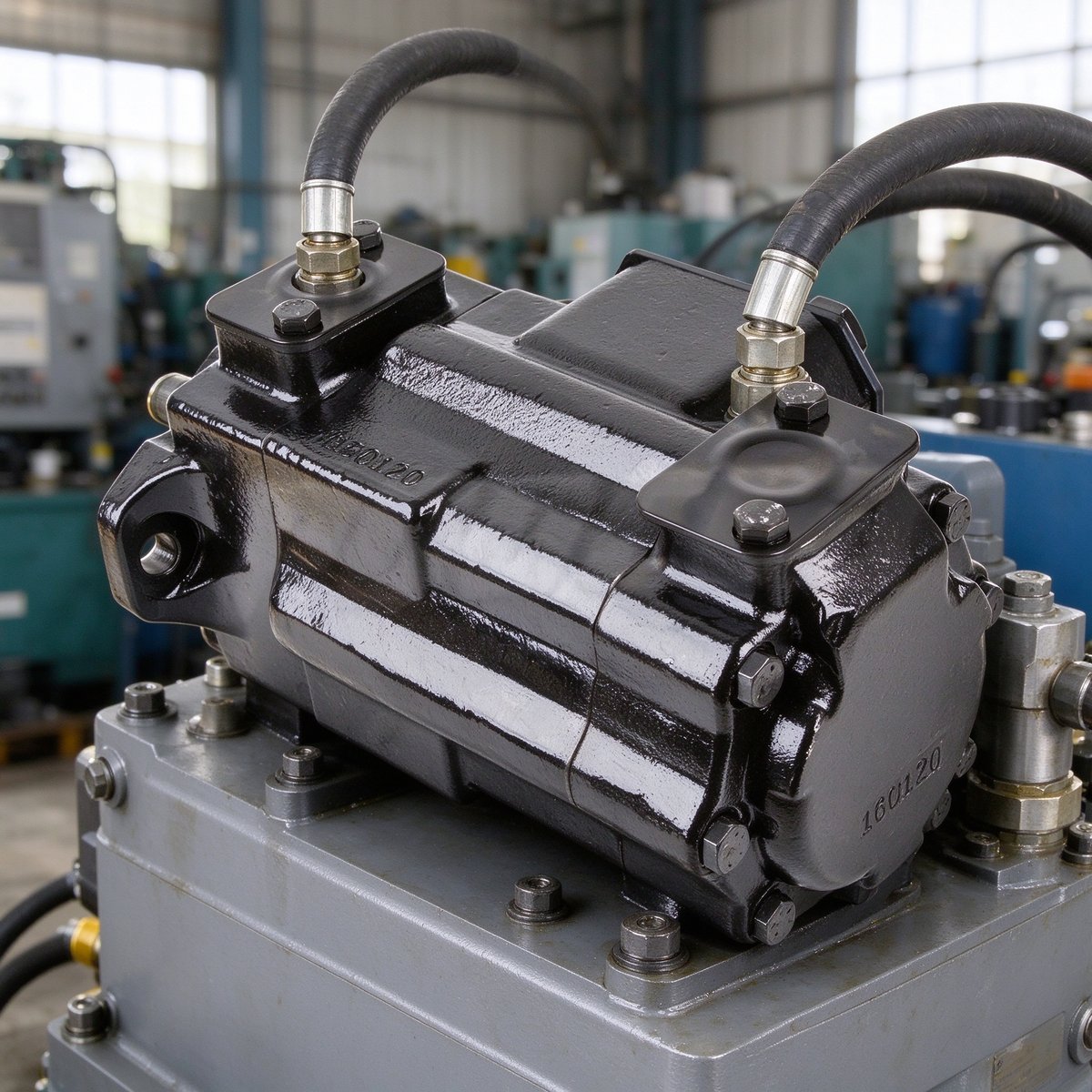
Drain requirements are model-specific. For example, Parker’s PVSH installation instructions specify a separate, unrestricted return-to-tank drain for that series. That instruction illustrates why the drain route belongs in a replacement check; Parker’s limit or connection design should not be applied automatically to another manufacturer’s pump.
Confirm Fluid and Operating Conditions
Tell the supplier which hydraulic fluid the machine uses, the operating temperature range, the expected duty cycle and whether special seals are required. Also provide the existing pump’s service history if the failure may have been caused by contaminated fluid, poor inlet supply or repeated overheating. A new pump selected to fit the shaft will not correct an unsuitable circuit condition.
For an installation already out of service, preserve the old pump and its markings until the replacement configuration has been confirmed. A qualified technician should follow the machine manufacturer’s isolation and pressure-release procedure before disconnecting hydraulic lines.
Replacement Inquiry Checklist
| Send with the inquiry | Why it matters |
|---|---|
| Complete existing model code and readable nameplate photo | Identifies control, pressure, rotation and design options |
| Single, double or tandem pump configuration; code of each section if double | A double vane pump can mix compensated and fixed sections, each with its own displacement |
| Machine model and application | Provides operating context and duty requirements |
| Required pressure, flow and drive speed | Allows a performance comparison at the intended operating point |
| Shaft-end and mounting-face photographs or drawings | Allows mechanical-interface checks |
| Suction, discharge and drain port details | Allows connection and installation checks |
| Hydraulic fluid and seal requirements | Helps verify material compatibility |
| Quantity and destination country | Allows a complete commercial quotation |
If some details are unavailable, send what you have and identify the missing items. The supplier can then explain what additional photograph, drawing or measurement is needed before confirming a configuration.
Ask POOCCA to Review the Proposed Configuration
POOCCA manufactures hydraulic vane pumps, including the VP-SF variable-displacement vane pump range. The series page is a starting point for a product inquiry; it does not establish that a particular VP-SF unit directly replaces every pressure-compensated pump.
Send your model code, nameplate photograph and the details in the checklist through the POOCCA contact page. Ask for the exact proposed model, its applicable technical data and a compatibility review before placing the order. POOCCA supplies its own manufactured products; a reference to another manufacturer’s model identifies the unit being replaced, not an original-brand unit supplied by POOCCA.
Post time: Oct-16-2026


