
Introduction — What Tokimec PV Series Is and Why It Matters
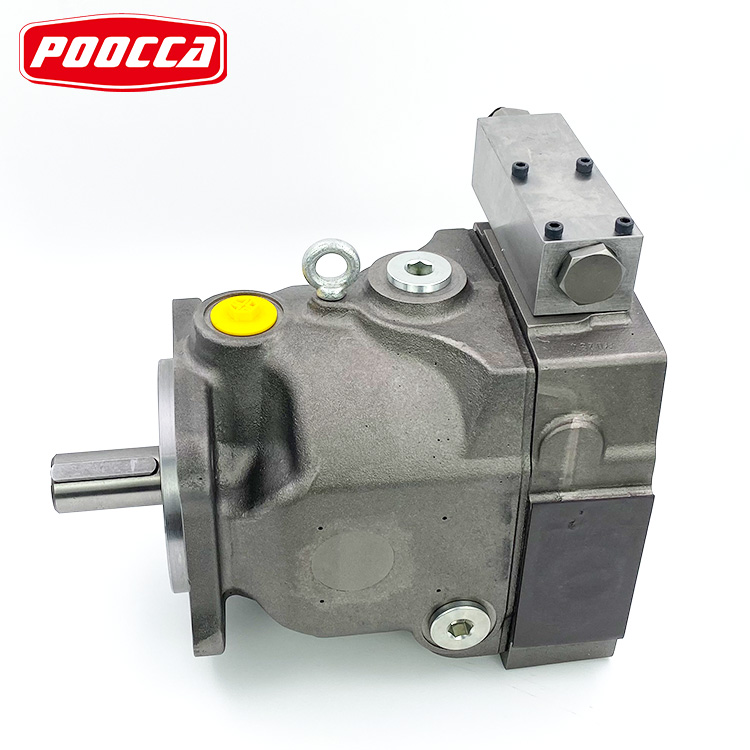
In industrial and mobile hydraulic systems, the choice of pump can profoundly affect performance, efficiency, lifetime costs, and system reliability. The Tokimec PV Series represents a set of variable displacement axial piston pumps engineered for precisely these demands — offering adaptability, high performance, and energy efficiency for complex hydraulic applications.
Originally developed by Tokyo Keiki Inc. (formerly Tokimec), a respected Japanese fluid power manufacturer with decades of engineering heritage, the PV Series is designed to meet the requirements of modern hydraulic systems where static, fixed output can lead to wasted energy and reduced control precision.
At its core, the PV Series allows the hydraulic system to match the pump’s output to the actual demand of the application, reducing unnecessary power consumption while maintaining performance. This capability is especially critical in applications with variable loads — such as presses, machine tools, construction machinery, and automated industrial systems — where both efficiency and responsiveness directly influence productivity and operating costs.
Unlike fixed displacement pumps that always deliver the same flow regardless of need, the Tokimec PV Series adjusts its displacement in real time through an internal mechanism, allowing the system to scale flow and pressure on demand. This not only improves energy utilization but also minimizes heat generation and hydraulic wear, which are common challenges in high‑duty applications.
How Variable Displacement Axial Piston Pumps Work
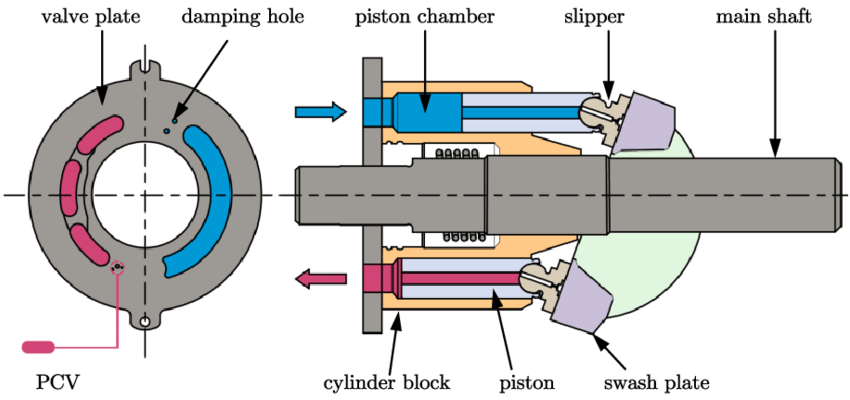
At the heart of the Tokimec PV Series is a simple yet powerful concept: the pump’s flow output can vary depending on system demand. Unlike fixed displacement pumps that always deliver the same volume per shaft revolution, a variable displacement pump adjusts the piston stroke to match the required flow.
This is achieved through a swash plate mechanism. As the pump’s drive shaft rotates, pistons move in and out against the swash plate. By changing the angle of that plate, the pistons’ stroke length changes — increasing stroke and flow when more system flow is needed, or reducing stroke when demand is low. This real‑time adjustment enables the pump to supply only the fluid that the system actually needs.
Because of this design, Tokimec’s PV Series delivers several practical benefits:
-
Energy efficiency: The pump avoids wasting power by reducing flow and pressure when they aren’t needed, which can significantly lower operating costs in systems with variable loads.
-
Less heat and wear: Less excess flow means less hydraulic heat generation and reduced stress on hoses, valves, and reservoirs.
-
Smooth system response: By adapting output instantly to demand, these pumps help maintain steady operation and improve control accuracy.
In essence, the variable displacement mechanism allows the PV Series to optimize system performance, making it a versatile choice across industries where flow and pressure vary frequently rather than staying constant.
Comprehensive Technical Specifications
| Model | Max Displacement (cm³/rev) | Max Working Pressure (MPa) | Max Speed (rpm) | Min Speed (rpm) | Weight (kg) | Noise Level (dB(A)) | Mounting Type |
|---|---|---|---|---|---|---|---|
| P16V | 16 | 21 | 1800 | 600 | 16 | ~68.5 | Flange/Foot |
| P21V | 21 | 21 | 1800 | 600 | 23 | ~68.5 | Flange/Foot |
| P31V | 31 | 21 | 1800 | 600 | 23 | ~68.5 | Flange/Foot |
| P40V | 40 | 21 | 1800 | 600 | 37 | ~68.5 | Flange/Foot |
| P70V | 70 | 21 | 1800 | 600 | 63 | ~68.5 | Flange/Foot |
| P100V | 100 | 21 | 1800 | 600 | 91 | ~68.5 | Flange/Foot |
| P130V | 130 | 21 | 1800 | 600 | 112 | ~68.5 | Flange/Foot |
Key technical takeaways from this data:
-
All PV models share a high pressure rating of 21 MPa, suitable for a wide range of industrial and mobile hydraulic systems.
-
Speed range from about 600 rpm to 1800 rpm allows flexibility in matching with different drive sources and control schemes.
-
Noise performance is kept around ~68.5 dB(A) across models, which helps meet workplace noise standards in many facilities.
-
The series offers flange or foot mounting options, aiding installation in diverse machine configurations.
Key Features and Control Options
The Tokimec PV Series isn’t just valued for its variable displacement design — it also offers a set of features and control choices that make it adaptable to a wide range of hydraulic systems. These built‑in capabilities help engineers fine‑tune performance, improve energy efficiency, and integrate the pump into modern automated systems.
Energy‑Saving and High Efficiency Design
One of the core strengths of the PV Series is its ability to match output to demand — meaning the pump only supplies the fluid volume needed by the system at any given moment. This reduces power waste and hydraulic heat generation, resulting in significant operational energy savings compared to fixed displacement units.
This design also supports efficient power usage across a broad range of operating conditions, helping users reduce operating costs — especially in applications with highly variable loads.
Low Noise Operation
Noise is a common concern in industrial environments. The PV Series is engineered to operate quietly, with sound levels around 68.5 dB(A) under standard conditions (e.g., 21 MPa at 1800 rpm). This makes these pumps suitable for workshops, manufacturing floors, and urban facilities where noise reduction improves working conditions and meets regulatory requirements.
Control Options — Tailored Output for Complex Systems
Tokimec PV pumps can be configured with multiple control strategies, enabling precise adjustment of output flow and pressure based on system demands. This flexibility is a major reason why the PV Series is widely used in complex hydraulic applications.
Here are the main control options:
• Pressure Compensator Control
This control mode maintains a set system pressure by automatically reducing pump displacement once the target pressure is reached. It’s ideal in applications where consistent pressure is more important than maximum flow at all times.
• Load Sensing Control
Load sensing adjusts the pump output based on the pressure differential across the load control valve. It ensures the pump delivers only the flow and pressure required to meet the load, optimizing system energy use.
• Electric Direct Control
This provides real‑time electronic control of pump displacement, allowing fine‑tuned responsiveness and integration with machine automation systems.
• Multi‑Stage & Proportional Control
Some PV Series configurations support multi‑stage or proportional control, offering multiple preset pressure levels or continuous adjustment capabilities for advanced system performance.
Integration and Circuit Simplification
Beyond the basic control mechanisms, the PV Series pumps can be configured with manifold blocks that incorporate function valves directly at the delivery port. This design reduces external components, simplifies hydraulic circuits, and reduces potential failure points. It also helps lower pulsations and overall noise in the system.
Typical Applications Where PV Performs Best
The Tokimec PV Series variable displacement piston pumps are engineered for versatility and durability, making them suitable for a wide range of industrial and mobile hydraulic systems where precision, efficiency, and adaptability are key. Their combination of high pressure tolerance, smooth control, and energy‑saving characteristics makes them an excellent choice for demanding applications.
Industrial Machinery
In manufacturing and heavy industry, PV Series pumps are often used in:
-
Machine tools such as milling and drilling machines, where controlled hydraulic power is needed over varying load conditions.
-
Hydraulic presses and forming equipment, where strong, stable hydraulic pressure directly impacts productivity and product quality.
-
General industrial automation systems, where precise flow and pressure control contribute to smoother operation and repeatability.
These settings benefit from the PV Series’ ability to adjust output dynamically, reducing power waste and providing smoother machine behavior across cycles.
Mobile and Construction Equipment
PV Series pumps are well suited for mobile hydraulics, including:
-
Excavators and loaders, where a variable flow helps balance boom movement, travel drive, and auxiliary functions.
-
Cranes and lifting machinery, where consistent pressure under varying loads is essential.
-
Agricultural and material handling equipment, where compactness, efficiency, and low noise improve overall system performance.
In these environments, the energy‑efficient nature of the PV Series also contributes to longer fuel or power unit life and reduced operational noise, which is particularly valuable in urban or noise‑sensitive sites.
Plastic and Press Systems
-
Injection molding machines use the PV Series for stable, controllable hydraulic power, which helps improve product consistency and reduce cycle times.
-
Press machines benefit from the series’ ability to maintain high load pressure and respond quickly to changes in demand, thereby enhancing operational reliability.
Energy‑Sensitive and Productivity‑Focused Systems
Because the PV Series adapts flow and pressure to actual needs, they’re also ideal in:
-
In an automated production line, multiple actuators need to work in different sequences.
-
Systems where heat and noise must be minimized, such as enclosed factory environments or facilities with strict regulatory requirements.
Common Misconceptions and Clarifications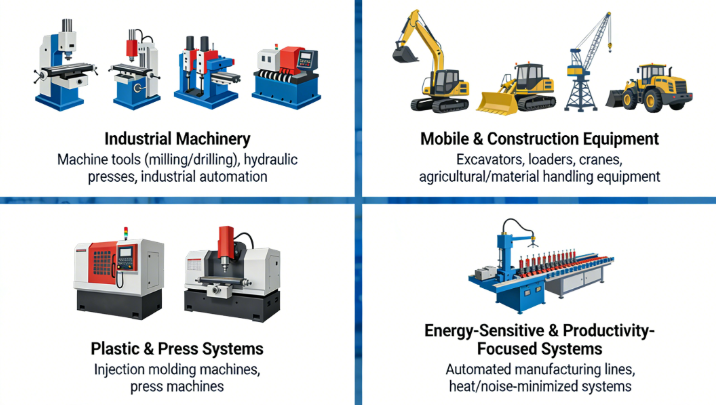
Misconception 1 — “Variable displacement pumps are too expensive”
It’s true that variable pumps typically cost more upfront than simple fixed‑displacement gear or vane pumps. However, focusing only on initial purchase price ignores the total cost of ownership. Variable pumps adjust flow to match system demand, which can substantially reduce wasted energy — especially in systems with fluctuating loads. Over a typical system lifecycle, energy savings and reduced heat generation can outweigh higher purchase costs, making variable displacement pumps more economical in many industrial settings.
Key reality: Upfront cost is only part of the picture — lifecycle cost savings matter more in variable load systems.
Misconception 2 — “All pumps can handle high pressure equally”
Not all pumps rated for high pressures behave the same in real systems. Simply relying on a maximum pressure number from a catalog doesn’t ensure that a pump will perform reliably over prolonged heavy use. Seal design, material strength, and internal clearances affect how a pump handles long‑term high pressure. Proper selection must consider pressure transients, fatigue, and real operating cycles, not just a peak rating.
Misconception 3 — “Advanced control and filtration aren’t necessary”
Some buyers assume that simpler systems with basic pumps and valves are good enough. In reality, variable displacement piston pumps are sensitive to contamination and control tuning. Poor fluid quality can accelerate wear and cause compensator malfunctions. Likewise, choosing the wrong control scheme (or ignoring advanced controls) leaves performance gains untapped.
Expert advice: Invest in quality filtration systems and select a control strategy (pressure compensator, load sensing, electronic control) that actually fits your application.
Misconception 4 — “Catalog specs are sufficient for selection”
A common mistake is selecting pumps solely based on catalog numbers like flow and pressure. Real‑world conditions — fluid temperature, suction losses, system pulsations, and duty cycle — often differ from ideal test conditions. Ignoring these factors can lead to mis‑sized pumps, cavitation, or premature wear.
Pro guidance: Evaluate the actual hydraulic environment and consult with experienced suppliers (like Poocca) to validate performance against real operating conditions.
Misconception 5 — “The pump alone solves system issues”
Some engineers believe that replacing an old pump with a “better” one will automatically fix system problems like heat, noise, or unstable pressure. But many performance issues stem from system design, not the pump itself — including poor reservoir layout, undersized return lines, or valve misconfigurations. A pump upgrade without a holistic system audit may not deliver expected improvements.
Selection Guide — How to Choose the Right PV Model
When choosing a Tokimec PV Series piston pump, focus on matching the pump to your system’s actual needs rather than simply picking the highest specs.
• Define system requirements first
– Identify your required flow and pressure based on actuator size and cycle requirements. PV models range in displacement but all share a similar max working pressure (~21 MPa), so select displacement to match your flow at the operating speed.
• Choose the right control method
– For systems with variable loads, load sensing or pressure compensator control improves efficiency by adjusting output to demand.
– If your system requires precise regulation or integration with automation, consider electric/proportional control. These options help maintain performance and reduce energy waste.
• Check speed and mounting compatibility
– Ensure your drive (motor/engine) can deliver pump speeds within the typical range for PV Series models.
– Confirm that mounting type (foot or flange) fits your design without significant modification.
Conclusion — Recap and Next Steps
In this article we’ve explored why the Tokimec PV Series stands out as a professional choice for variable displacement hydraulic pumps — delivering energy‑efficient performance, smooth control, and wide applicability across industrial and mobile systems. These pumps feature a broad displacement range (from 16 cm³/rev up to 130 cm³/rev), reliable high pressure capability (up to about 21 MPa), and versatile control options including pressure compensator, load sensing, and electric proportional control.
The PV Series is designed to adapt its output to actual system demands, reducing wasted energy and heat while improving workload response. This makes them especially suited for machine tools, hydraulic presses, construction equipment, and automated systems where efficiency and performance are paramount.
As you evaluate hydraulic pump options, remember these key points:
-
Match displacement to actual flow demand and operating speed.
-
Choose control methods based on system complexity and efficiency goals.
-
Use proper filtration and fluid selection to protect the pump and extend service life.
Why Work with Poocca Hydraulic
At Poocca Hydraulic, we pair deep expertise in hydraulic pump selection with hands‑on support to help you get the right Tokimec PV Series pump for your application. Whether you need help with sizing, control strategy, or integration guidance, our engineering team is ready to assist:
-
Application consulting: We evaluate your system requirements and recommend the best pump and control solution.
-
Technical support: From installation tips to control configuration, we help ensure reliable performance.
-
OEM quality parts and delivery: We offer genuine Tokimec PV Series pumps and compatible accessories.
To take the next step, contact Poocca Hydraulic today with your system specifications or request a quote — our team will work with you to optimize your hydraulic system’s performance and efficiency.
Post time: Mar-07-2026


