
In industrial fluid power systems, piston pumps are a cornerstone technology for achieving high‑performance hydraulic power, especially where pressure, precision, and efficiency are critical. Unlike simpler pump types such as gear or vane pumps, piston pumps use a positive‑displacement principle in which one or more pistons reciprocate within cylinders, producing very controlled, high‑pressure fluid flow. This fundamental mechanism enables piston pumps to maintain performance even under demanding load and operational conditions.
A high‑performance piston pump is more than just a component; it is a solution for systems that must deliver reliable pressure, consistent flow, and long operational life. These characteristics make piston pumps suitable for heavy industrial hydraulics, large‑scale manufacturing equipment, construction machinery, and other sectors where medium‑ to high‑pressure hydraulic power is essential.
How Piston Pumps Work — Performance Principles

A piston pump is a positive‑displacement pump that moves fluid by converting mechanical motion into fluid flow through the reciprocating action of one or more pistons within cylinders. In each cycle, the piston’s backward (suction) and forward (discharge) movements create alternating vacuum and pressure zones, drawing fluid in and then pushing it out at controlled flow rates. This mechanism allows piston pumps to deliver a fixed volume of fluid per cycle, making their output largely independent of system pressure — a fundamental reason they are used in high‑performance hydraulic systems.
Here’s how the basic cycle works:
-
Suction Stroke: The piston retracts, increasing chamber volume and creating a pressure drop. A check inlet valve opens, allowing fluid to fill the cylinder.
-
Discharge Stroke: The piston advances, reducing chamber volume. The inlet valve closes and the discharge valve opens, forcing fluid into the hydraulic system at higher pressure.
This reciprocating motion, repeated many times per minute, produces a steady, high‑pressure fluid flow that can be precisely controlled. Because the flow is tied directly to piston displacement and speed — not merely pump speed or downstream pressure — piston pumps maintain performance even under varying load conditions.
Most high‑performance models used in industrial and mobile hydraulics are axial piston pumps, where multiple pistons are arranged around a rotating cylinder block connected to a swash plate. By adjusting the swash plate angle, the effective stroke length changes — and with it, the pump’s displacement and flow rate — giving the system variable output control without changing drive speed.
Key Performance Metrics Compared
To guide engineering decisions and purchasing choices, it’s essential to compare how piston pumps perform relative to other common hydraulic pump types — especially gear pumps and vane pumps — across the metrics that matter most in real applications.
| Feature | Piston Pump | Gear Pump | Vane Pump |
|---|---|---|---|
| Maximum Pressure Capability | Very High — often 400+ bar or more | Medium — typically up to ~250–300 bar | Medium — generally up to ~200 bar |
| Volumetric Efficiency | Very High — ~90%+ | Moderate | Good (~85–95%) |
| Flow Control | Variable (with displacement control) | Fixed | Fixed or variable |
| Mechanical Complexity | High | Low | Moderate |
| Noise Level | Moderate | Higher | Lowest |
| Maintenance Cost | Higher (due to complexity) | Lower | Moderate |
| Best For | High‑pressure, precise systems | Low‑to‑medium pressure, cost‑sensitive | Smooth flow, quiet environments |
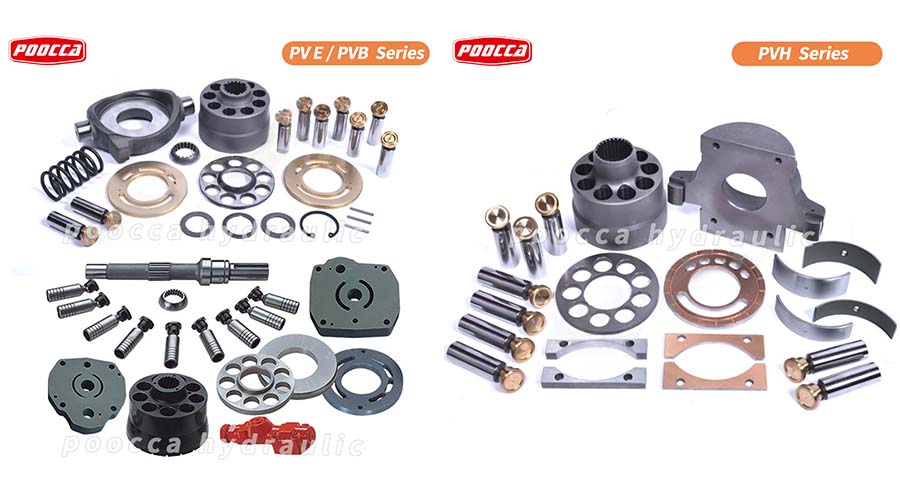
Advantages of high-performance piston pumps
A. Exceptional High Pressure Capability
One of the most significant performance traits of piston pumps is their ability to generate and sustain very high pressures. Unlike gear or vane pumps that typically operate in moderate pressure ranges, piston pumps can handle pressures exceeding 1,000 psi (≈ 69 bar) and far beyond in many industrial configurations.
B. Superior Efficiency Across Operating Conditions
Piston pumps generally exhibit high volumetric efficiency (often above 90 %), meaning that a large percentage of the mechanical input energy is converted into useful hydraulic power with minimal internal loss. This efficiency translates into less wasted energy, reduced heat generation, and lower operating costs compared to pumps with lower efficiency profiles.
Furthermore, pumps with variable displacement control can dynamically adjust flow and pressure to match system demand. This feature reduces energy waste and enhances responsiveness, especially in systems with fluctuating loads.
C. Precision Flow and Pressure Control
High‑performance piston pumps are often integrated with precision control mechanisms that deliver consistent and accurate fluid output. This makes them suitable for applications requiring tight control over hydraulic motion, force, or position. Whether in industrial automation or aerospace hydraulics, the ability to regulate flow and pressure precisely is a defining performance advantage.
D. Durability and Long Service Life
The robust construction of piston pumps — often using hardened materials and precision manufacturing — contributes to long service life even under harsh conditions. Because piston pumps are designed to run at high pressures and duty cycles, they reduce wear on downstream components and support extended maintenance intervals. This durability can significantly lower lifecycle costs, even if the initial investment is higher.
Common Misconceptions
Misconception 1: “Piston pumps are only for the highest‑pressure systems.”
Reality: While piston pumps excel in high‑pressure environments, their application isn’t limited to extreme pressure alone. Many industrial systems with medium to variable pressure needs benefit significantly from piston pump precision and efficiency compared with gear pumps. Their ability to offer variable displacement and precise flow control makes them suitable across a broader range of systems than commonly assumed.
Misconception 2: “Piston pumps are too noisy and unsuitable for general use.”
Reality: It’s true that piston pumps involve reciprocating components which can produce noise and vibration under some conditions. However, modern designs and proper installation (mounting, isolation, dampeners) can manage noise to acceptable industrial levels. Noise shouldn’t be a disqualifier — especially when balanced against performance gains in pressure and efficiency.
Misconception 3: “Simpler pumps are always more reliable than piston pumps.”
Reality: Gear pumps and some vane pumps are simpler and easier to maintain, but “simplicity” does not automatically mean greater reliability for all applications. In high‑pressure, high‑duty environments, piston pumps’ robust engineering and superior control can reduce system stress and cumulative wear on other components, often resulting in longer system life overall. Reliability must be evaluated in the context of the application demands and maintenance practices.
Misconception 4: “Piston pumps only benefit high‑tech or specialty industries.”
Reality: Because piston pumps are versatile and capable of handling a wide range of pressures and flow demands with precision, they are increasingly used in mainstream industrial hydraulics, construction machinery, manufacturing automation, and mobile equipment — not just specialist or exotic systems. Their adaptability across industry needs is a major performance advantage.
Misconception 5: “Higher initial cost means they’re not cost‑effective.”
Reality: Yes, piston pumps typically have a higher upfront cost and require more careful fluid cleanliness and maintenance versus simpler pumps. But because they deliver higher efficiency (often above 90 %) and superior flow control, the lifecycle cost — including energy savings, reduced downtime, and fewer system failures — can make them more cost‑effective over time in demanding applications.
Conclusion — Making the Right Choice for High‑Performance Hydraulic Power
High‑performance piston pumps are not just another type of hydraulic pump — they are engineering solutions designed to meet the toughest challenges in modern hydraulic systems. Their high pressure capability, precision control, and energy efficiency set them apart from gear and vane pumps, making them indispensable in demanding industrial and mobile applications.
As we’ve discussed throughout this article:
-
High pressure and precision: Piston pumps routinely operate at very high pressures (often beyond what gear and vane pumps can reliably handle) and with accurate flow control through variable displacement capabilities.
-
Efficiency and energy savings: With volumetric efficiencies often exceeding 90 % and the ability to adjust flow to system demand, piston pumps reduce energy waste and heat generation, particularly in variable‑load systems.
-
Lifecycle considerations: While piston pumps typically have a higher upfront cost and require careful maintenance due to complex internal components, their durability and performance over time often result in lower total cost of ownership in high‑duty applications.
-
Fit‑for‑purpose selection: Choosing the right hydraulic pump (whether piston, gear, or vane) depends on your pressure requirements, flow control needs, maintenance capability, and budget. In systems where high pressure, precise control, and energy efficiency are priorities, piston pumps are often the best choice.
In short, high‑performance piston pumps deliver value where it matters most — in system reliability, operational efficiency, and adaptability to demanding hydraulic environments.
At Poocca, we understand that choosing the right piston pump isn’t just about picking a powerful component — it’s about matching system requirements, performance goals, and long‑term value. That’s why our portfolio of high‑performance piston pumps is engineered to deliver reliable, efficient, and customizable hydraulic power across a wide range of demanding applications.
Poocca’s piston pumps are designed to work reliably in high‑pressure environments where other pump types fall short. Our pumps are well suited for:
-
Construction hydraulics — excavators, loaders, and cranes
-
Industrial machinery — presses, molding machines, and automated systems
-
Material handling equipment — forklifts, lifting tables, and conveyors
-
Oil & gas and marine systems — heavy‑load and continuous operation
These applications benefit from the consistent pressure delivery and high volumetric efficiency that Poocca piston pumps provide, supporting stable system performance even under fluctuating loads.
If you’re evaluating hydraulic pumps for your application and want expert guidance on selecting the optimal solution, Poocca’s engineering team is here to help. Contact us to discuss your system requirements, and we’ll tailor a recommendation that balances performance, cost‑efficiency, and long‑term value.
Post time: Jan-20-2026


