
When you search for NSH series gear pumps, you’re likely trying to solve real engineering and purchasing questions — not just find a generic definition. This article is written by a hydraulic pump industry expert with over 20 years of experience at Poocca, a leading manufacturer and supplier. It will explain NSH series gear pumps in practical detail, focusing on what matters most to engineers, maintenance teams, and procurement professionals: how they work, how to choose the right model, key performance data, and how to avoid common mistakes.
What Is an NSH Series Gear Pump?
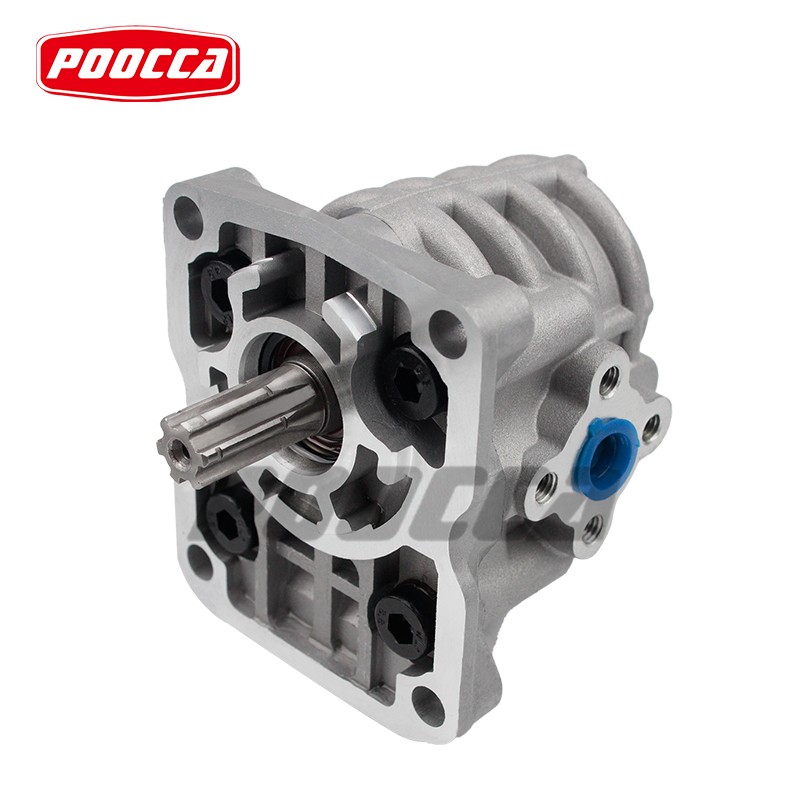
An NSH series gear pump is a type of external gear pump widely used in hydraulic systems for steady and predictable fluid delivery. As a positive displacement pump, it moves a nearly constant volume of fluid for each rotation of its gears, making it ideal for systems where consistent output and reliability are key.
At the heart of the NSH design are two intermeshing gears housed inside a rigid casing. One gear is driven by a prime mover — typically an internal combustion engine or motor — while the second gear is driven indirectly. As the gears rotate, fluid is drawn into the spaces between the gear teeth and the casing on the inlet side and carried around to the discharge where it is forced out under pressure.
This simple yet rugged design delivers several practical advantages:
-
Stable flow proportional to engine speed, because each revolution displaces a predictable amount of fluid.
-
High reliability with minimal moving parts, reducing maintenance needs and improving uptime.
-
Compact footprint, suitable for space-restricted installations such as tractors and construction equipment.
How NSH Gear Pumps Work
-
Fluid Inlet: As the gears begin to rotate, the meshing action on the suction side creates a low-pressure zone that draws fluid into the pump.
-
Fluid Transfer: The fluid becomes trapped in the cavities formed by the gear teeth and the casing walls, moving fluid smoothly around the pump body.
-
Fluid Discharge: On the outlet side, the teeth mesh again, forcing the fluid out into the hydraulic system at pressure.
This mechanism makes external gear pumps like the NSH series especially effective in hydraulic circuits requiring predictable volumetric output and robust performance.
NSH Series Technical Parameters
NSH Series Performance Overview
| Specification | Typical NSH Series Range / Values | Why It Matters |
|---|---|---|
| Flow Range | 1.6 – 150 m³/h | Covers small auxiliary circuits to high-capacity hydraulics. |
| Displacement (cm³/rev) | ~6 – 250 | Determines how much fluid the pump moves per revolution. |
| Continuous Operating Pressure | ~0.6 – 2.0 MPa (~60 – 200 bar) | Steady-state system operation rating. |
| Intermittent / Peak Pressure | ~2.1 – 2.8 MPa (~210 – 280 bar) | Handles short-term pressure spikes. |
| Rated Speed | ~1 500 – 2 900 rpm | Must be matched to engine/motor output. |
| Max Speed (Some Models) | Up to ~4 200 rpm | Small units can spin very fast. |
| Fluid Viscosity | Typical 7.5 – 10 cSt | Optimized for conventional hydraulic fluids. |
| Operating Temperature | ~–45 °C – 350 °C (varies by spec) | Depends on fluid and pump materials. |
| Media Types | Mineral oil, gear oil, diesel, heat-transfer oil, paraffin, etc. | NSH handles many common fluids. |
| Materials | Cast iron, aluminum, bronze, stainless (varies) | Material choice affects durability and corrosion resistance. |
Representative Model Parameter Examples
To help you translate numbers into selection decisions, here are example breakdowns of typical NSH sub-series:
NSH “M” / Standard Series
| Model | Displacement (cm³/rev) | Max Continuous Pressure (bar) | Peak Pressure (bar) | Max Speed (rpm) |
|---|---|---|---|---|
| NSH 6M-3 | ~6 | ~160 | ~210–250 | ~4 200 |
| NSH 10M-3 | ~10 | ~160 | ~210–250 | ~4 200 |
| NSH 32M-3 | ~32 | ~160 | ~210–250 | ~3 600 |
| NSH 100M-3 | ~100 | ~160 | up to ~210 | ~2 400 |
These models represent general-purpose pumps, suitable for tractors, loaders, and mid-size hydraulic circuits with moderate pressure requirements.
NSH “A” / Heavy-Duty (ANTEY) Series
| Model | Displacement (cm³/rev) | Cont. Pressure (bar) | Interm. / Peak (bar) | Speed Range (rpm) |
|---|---|---|---|---|
| NSH 32A-3 | 32 | ~160 | ~210 | ~500 – 3 000 |
| NSH 50A-3 | 50 | ~200 | ~210–250 | ~500 – 2 400 |
| NSH 71A-3 | 71 | ~200 | ~210–250 | ~500 – 1 920 |
| NSH 100A-3 | 100 | ~200 | ~210–250 | ~500 – 1 920 |
| NSH 250A-4 | 250 | ~200 | ~250–280 | ~500 – 1 920 |
The “A” or ANTEY series pumps extend pressure capability and size range, making them better suited to large construction equipment, heavy agricultural machinery, and high-duty industrial hydraulics.
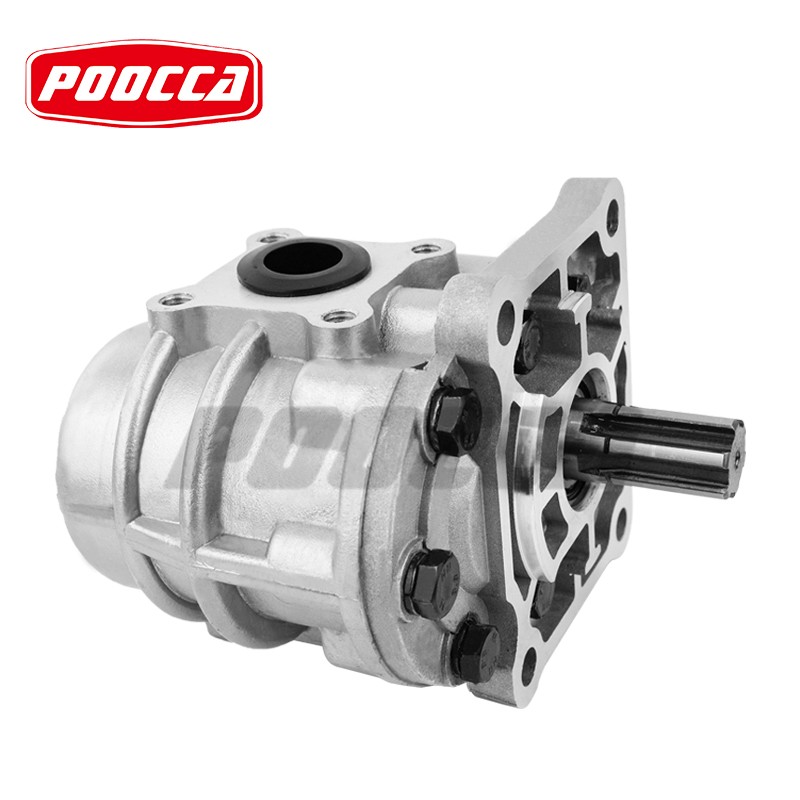
NSH Series Variants Explained
The NSH series gear pumps include multiple sub-series tailored to different flow, pressure, and application requirements. Understanding these variants helps you select the model that best fits your system’s performance goals and operating conditions.
NSH “M” Series — Standard Hydraulic Gear Pumps
The NSH “M” series, often referred to as the standard or “Master” group, offers reliable performance across a wide range of general hydraulic applications. These pumps are cost-effective, simple in design, and easy to integrate.
Key characteristics of NSH M series:
-
Displacement range: small to moderate (e.g., NSH6M-3 to NSH100M-3)
-
Continuous pressure rating: up to about 160–200 bar depending on size
-
Maximum intermittent/peak pressure: up to ~210–280 bar in larger units
-
Max rotational speed: up to ~4200 rpm on smaller displacements
-
Available in left-hand and right-hand rotations to match drive orientation
Typical Applications:
Agricultural machinery, loaders, compact pumps in mobile equipment, general industrial hydraulics.
The “M” series is often the first choice when you need mid-range flow and pressure with high reliability and low maintenance cost.
NSH “A” Series — Heavy-Duty / ANTEY Gear Pumps
The NSH “A” series (sometimes referenced as the ANTEY variant) is designed for heavier loads and larger equipment. These pumps support higher pressures and are built for more demanding industrial and mobile environments.
Key features of NSH A series:
-
Displacement range: typically 32 – 250 cm³/rev
-
Continuous pressure: up to ~200 bar
-
Intermittent/peak pressure: up to ~250 – 280 bar
-
Speed range: ~500 to ~3000 rpm depending on size
Why choose “A” series:
-
Higher pressure handling makes them suitable for large construction or agricultural machinery.
-
Robust design supports continuous duty cycles in harsh conditions.
When your application demands higher flow at elevated pressures or longer service life under heavy use, the NSH “A” series is an excellent choice.
Specialized Variants (“G”, “D”, “МЧ”, etc.)
Beyond the main “M” and “A” groups, manufacturers may produce other suffix-designated NSH variants that emphasize specific features:
-
G variant: optimized for higher speeds or specific flange standards.
-
D variant: may indicate different mounting or porting configurations.
-
МЧ series: cast-iron body versions for enhanced resistance to heavy loads (e.g., NSH32МЧ-4, NSH50МЧ-4).
These options give designers flexibility when standard pump configurations aren’t ideal — for example, in special OEM equipment or industrial power packs.
How to Choose the Right NSH Gear Pump — Simple Selection Flow
Selecting the proper NSH gear pump doesn’t have to be complex. Below is a straightforward, engineer-friendly workflow that helps you match pump performance with your system requirements:
Determine System Flow Requirement
Estimate the required flow rate of your hydraulic system in L/min or m³/h. Because NSH gear pumps are fixed-displacement, flow is proportional to pump displacement × rpm. Use this to target displacement size first.
Confirm Operating Pressure
Identify the maximum continuous pressure your system will experience. Choose a pump whose continuous pressure rating meets or exceeds this value (with ~10–20 % safety margin). This ensures longevity and reliability.
Match Rotation & Mechanical Fit
Determine whether your drive requires left or right rotation and ensure the NSH model’s rotation matches. Also confirm shaft size, flange type, and mounting compatibility so the pump integrates without modification.
Check Speed & Drive Compatibility
Match the pump’s rated rpm range to your prime mover (engine or motor). Avoid exceeding the pump’s maximum safe rpm, as this can reduce life and increase heat.
Confirm Fluid & Environment
Ensure the pump’s materials and seals are compatible with your hydraulic fluid and operating temperature. Typical NSH hydraulic fluids include mineral oil and gear oil; viscosity range and temperature tolerance affect efficiency and wear.
Common Misconceptions About Gear Pumps
Misconception 1: Gear Pumps Work with Any Fluid Without Issues
Myth: Gear pumps can reliably handle all kinds of fluids — from thin solvents to thick oils.
Reality: Because gear pumps rely on tight internal clearances and gear‑to‑housing sealing, very low viscosity fluids tend to slip internally, reducing actual delivered flow and volumetric efficiency. Conversely, very viscous fluids can cause excessive friction, require more input power, and generate heat, especially at low temperatures. This affects efficiency and component wear.
Misconception 2: Gear Pumps Need No Maintenance — They’ll Run Forever
Myth: Once installed, gear pumps are virtually maintenance‑free.
Reality: While simpler than more complex pump types, gear pumps still require proper maintenance. Contaminants like dirt, water or air drastically accelerate wear of gears and bearings, and are a leading cause of failures.
Misconception 3: Noise Means the Pump Needs More Power
Myth: If the pump is noisy, just use a stronger motor or higher drive power.
Reality: Noise in a gear pump — especially grinding, rattling or gravel‑like sounds — is most often a symptom of issues such as cavitation, aeration (air in the fluid), poor suction conditions, or mechanical wear, not a lack of power. Simply adding power can worsen internal stress and lead to rapid damage.
Misconception 4: Cavitation Only Happens When NPSHa < NPSHr and Always Causes Immediate Damage
Myth: Cavitation only occurs if the available suction head is less than required, and if it happens, catastrophic damage is inevitable.
Reality: Cavitation is more nuanced. Small amounts of entrained air or vapor bubbles can be present even when NPSHa exceeds the theoretical requirement, depending on suction conditions, fluid temperature, and system dynamics. When cavitation occurs — whether from low suction pressure, high temperature, or poor suction design — it results in noise, reduced flow, and gradual wear of internal surfaces rather than instant failure.
Misconception 5: Bigger Pumps Are Always Better
Myth: Choosing an oversized pump gives extra safety and performance margin.
Reality: Oversizing a gear pump often backfires. Excess flow can lead to inefficient operation, higher energy consumption, increased heat, and vibration in piping and components. Instead of a “safe margin,” oversized pumps often introduce problems and increase lifecycle costs.
Installation & Maintenance Best Practices
Installation Essentials
1. Align the Shaft Precisely
Correct shaft alignment between the pump and its prime mover (engine or motor) prevents undue stress, vibration, and early bearing or seal wear. Misalignment is a common root cause of noise and mechanical failure.
2. Secure and Stable Mounting
Mount the pump on a rigid, flat surface and tighten fasteners according to manufacturer torque specifications. Loose or uneven mounting increases vibration and reduces service life.
3. Check Pump Orientation and Connections
Follow the manufacturer’s recommended orientation, ensuring the inlet/outlet lines are connected securely using compatible fittings and sealants. Proper hydraulic line routing minimizes stress and avoids air ingress.
4. Install Filtration and Strainers
Use a suction‑side strainer or filter with adequate surface area to prevent contaminants from entering the pump. Particles and debris are a leading cause of early wear in gear teeth, seals, and bearings.
5. Test Run Before Full Operation
After installation, perform a short test run while monitoring for vibration, noise, leaks, or abnormal temperature rise. This early test can catch setup issues before the pump sees full load.
Routine Maintenance Checklist
Even rugged gear pumps like the NSH series benefit from a simple, regular maintenance routine. Consistent inspection helps detect minor issues before they escalate into costly failures.
1. Regular Visual Inspections
Inspect the pump body, connections, and seals for signs of leaks, corrosion, or wear. A visual check can quickly identify issues like loose bolts or degrading seals before they lead to fluid loss.
2. Check and Replace Seals/Bearings
Seals and bearings are wear items. Listen for unusual noises (grinding, squealing) that can indicate bearing wear, and replace seals before they fail to prevent leakage and contamination ingress.
3. Keep Hydraulic Fluid Clean
Contaminated fluid accelerates wear. Change or clean filters regularly and monitor fluid condition (color, clarity, particles). Clean hydraulic oil reduces internal wear and extends pump life.
4. Monitor Lubrication and Temperature
Ensure bearings and internal components are correctly lubricated and operating within the recommended temperature range. Excess heat or inadequate lubrication leads to faster wear.
5. Scheduled Inspections and Log Records
Set up routine checks (monthly or based on operating hours) and keep maintenance logs. Tracking patterns in vibration, pressure, or fluid condition helps catch trends that may signal emerging issues.
Application Scenarios — Where NSH Series Gear Pumps Are Used
Agricultural Machinery
NSH pumps power hydraulic circuits in tractors, harvesters, and farm equipment — such as steering systems, implement lifts, and auxiliary actuators — where consistent flow and moderate pressure are required.
Construction & Earth‑Moving Equipment
In loaders, backhoes, graders, and other construction machines, NSH pumps supply pressurized oil for lift arms, steering cylinders, and attachments in rugged environments like building sites.
Material Handling & Industrial Vehicles
These pumps are also found in forklifts, telehandlers, utility vehicles, and compact loaders,In these devices, compact size and reliable hydraulic power enhance related auxiliary capabilities., tilting, or auxiliary functions.
Municipal & Road Machinery
Municipal vehicles and road maintenance equipment use NSH gear pumps for functions such as blade control, dump operations, and hydraulic steering, benefiting from their ability to operate reliably in outdoor and variable conditions.
Custom & Direct Drive Systems
Because many NSH units are designed for direct coupling to engine power take‑offs (PTO), they are commonly used in mobile power packs, auxiliary drive applications, and custom hydraulic integrations where simplicity and direct drive efficiency are priorities.
Conclusion — Expert Advice & Next Step
Thank you for reading this detailed guide on NSH series gear pumps. Throughout this article, we’ve explained not just what these pumps are, but how they work, how to interpret key technical parameters, how to choose the right model, common misconceptions that can lead to mistakes, and practical installation and maintenance best practices — all based on real engineering experience and industry standards.
When it comes to getting long‑lasting, reliable performance from an NSH gear pump, remember the following key points:
-
Match pump performance to your system’s real requirements — flow, pressure, speed, and fluid characteristics should all be aligned with your operational needs.
-
Avoid common selection myths, such as oversizing for “safety”, assuming all fluids will work equally well, or believing gear pumps are maintenance‑free.
-
Correct alignment, secure mounting, clean fluid, and regular checks prevent early wear and failure. Regular inspection also helps catch issues like wear or leaks early, before they affect system performance.
Finally, if you’re evaluating NSH gear pumps for a new design, system upgrade, or replacement project, Poocca Hydraulic is ready to support you with:
-
Precise technical consultation to match pump models to your system demands
-
OEM/ODM customization tailored to your equipment
-
After‑sales support including selection help, maintenance tips, and spare parts
Next step: If you’d like a personalized pump recommendation or a quotation based on your application details (such as required flow, pressure, and prime mover characteristics), just reach out — we’ll help you make the best choice.
Post time: Jan-07-2026


