
When it comes to hydraulic systems, the pump is literally the heart of the entire mechanism — and for heavy equipment made by industry leaders like Caterpillar, choosing the right pump can make a dramatic difference in performance, reliability, operating cost, and long-term value.
In this article, we’re not just explaining what a Caterpillar gear pump is — we’re going deeper: explaining how it works, why Caterpillar designs them the way they do, where they fit best in real-world hydraulics, and most importantly how you should think about costs and selection as a buyer or maintenance decision-maker.
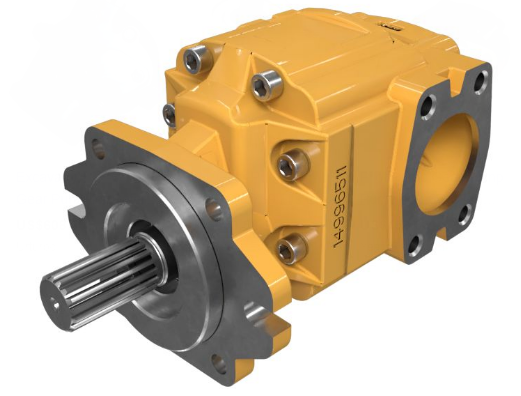
What Is a Caterpillar Gear Pump?
A Caterpillar gear pump is a specific type of hydraulic gear pump used on Cat® machines for delivering hydraulic fluid within a system. At its core, it’s a positive-displacement rotary pump — meaning it moves a fixed volume of fluid per rotation, using the meshing action of gears to carry hydraulic oil from the inlet side to the outlet side. This fixed-displacement mechanism makes the pump predictable, simple in design, and highly robust in mobile equipment applications.
From Caterpillar’s official product line, gear pumps are part of a broader family of hydraulic pumps and are typically used in open-center hydraulic circuits — where the control strategy relies on a constant flow source rather than advanced variable-flow metering. Caterpillar designs these pumps with rugged journal bearings, high-pressure end plates, and high-temperature seals so they can withstand harsh conditions and extend service life under field use.
Caterpillar Gear Pump Technical Features
Key Specifications & Design Attributes
| Technical Parameter | Typical Feature / Value | Why It Matters |
|---|---|---|
| Displacement (cc/rev) | Common CAT models include CGP81 (≈ 81 cc/rev), CGP97 (≈ 97 cc/rev), CGP113 (≈ 113 cc/rev) and tandem variations combining these displacements. | Displacement determines flow output per revolution; choosing the right size is critical for system performance. |
| Pressure Capability | Max continuous ≈ 207 bar (≈ 3000 psi); intermittent up to ≈ 248 bar (≈ 3596 psi). | Suitable for moderate pressure circuits; not engineered for highest-pressure main actuators. |
| Speed Range | Approximately 600 – 2900 rpm. | Defines operational speed envelope; exceeding ratings accelerates wear and risk of failure. |
| Temperature Range | Continuous oil temp up to ≈ 93 °C (≈ 199 °F). | Ensures reliability in typical working fluids; underscores need for appropriate fluid cooling and selection. |
| Configuration Options | Single or tandem section; standard SAE flanges and splines. | Flexibility for simple or multi-output hydraulic circuits. |
| Housing & Materials | Cast-iron housings with rugged journal bearings and high-temperature seals. | Designed for durability, contamination resistance, and shock loads in mobile/heavy-duty environments. |
How It Works in Practice – These pumps operate on a fixed-displacement external-gear principle, where fluid is drawn into the gear teeth cavities at the inlet, carried around the housing, and discharged at the outlet as the teeth mesh. Each revolution produces a consistent “slug” of fluid proportional to displacement times rotational speed, making flow predictable and stable.
Design Elements That Impact Performance
-
Displacement & Flow Control
Gear pumps deliver a fixed volume per turn. Unlike variable-displacement pumps (e.g., piston types), you can’t change flow without adjusting speed or adding external controls. This simplicity enhances reliability but limits flexibility. -
Robust Construction
Caterpillar gear pumps prioritize ruggedness: they often use cast-iron housings, oversized journal bearings, and high-pressure end plates to extend life under high load, vibration, and contamination conditions. -
Temperature & Pressure Ratings
The design specs — such as a typical max continuous working temperature around 93 °C and pressures up to ~207 bar — reflect the environments in which these pumps are expected to operate (steering, auxiliaries, transfer circuits). -
Mounting & Compatibility
Caterpillar gear pumps are built to fit standard interfaces used across Cat equipment (e.g., spline drives, SAE flanges), making replacement or integration easier when matching part numbers.
Why Caterpillar Gear Pumps Are Used in Heavy Equipment
Caterpillar gear pumps aren’t chosen at random — they’re specified because their design aligns closely with the needs of many heavy-duty hydraulic systems. On Cat equipment and similar machines, these pumps play a key role in delivering reliable hydraulic power for moderate-demand circuits where simplicity, durability and cost-effective performance matter.
Rugged & Reliable for Real-World Conditions
Caterpillar’s official documentation emphasizes that their gear pumps are “simplest, most rugged and least expensive” options in the Cat hydraulic pump lineup. They are optimized with rugged journal bearings, high-pressure end plates and high-temperature seals so that they withstand real jobsite environments — including temperature fluctuations, shock loads, and particulate contamination that heavy equipment frequently encounters.
Suited for Open-Center, Moderate Pressure Circuits
Gear pumps are typically used in open-center hydraulic systems — where the demand is for steady continuous flow rather than dynamically controlled variable flow. Their fixed-displacement design makes them ideal for circuits such as steering, pilot supply, charge/return circuits and auxiliary systems. These are all places where consistent flow at moderate pressure is more important than variable displacement control or very high efficiency.
High Resistance to Contamination
A standout advantage of gear pumps in heavy equipment is their relative tolerance to contamination compared with more sensitive designs like variable-displacement piston pumps. The simpler internal structure and robust bearings help maintain performance even when fluid cleanliness is less than ideal — common in rugged field environments.
Cost-Effectiveness & Ease of Maintenance
Because gear pumps have fewer moving parts and simpler construction than many other hydraulic pump types, they generally cost less to produce and maintain. This translates to a lower total cost of ownership for fleets and equipment owners managing multiple machines or high operating hours.
Common Misconceptions & Expert Clarifications
Misconception 1 — “Gear pumps are only for low-pressure/simple systems.”
Reality: It’s true gear pumps are not designed for the highest-pressure main circuits, but quality external gear pumps (including CAT-style pumps) are reliable for many medium-pressure applications such as steering circuits, charge circuits, fluid transfer loops, and secondary hydraulic functions typical in heavy equipment.
Misconception 2 — “Gear pumps have near-zero internal leakage and efficiency comparable to piston pumps.”
Reality: All gear pumps exhibit internal leakage (“slip”) due to clearances between gears, end plates, and housing. As components wear, this leakage increases, reducing volumetric efficiency and flow output. They remain efficient for their intended duties, but performance will always differ from variable piston pumps that maintain tighter clearances by design.
Misconception 3 — “You can use any fluid with gear pumps.”
Reality: Gear pumps are sensitive to fluid viscosity and cleanliness. Very low-viscosity fluids increase internal slip and reduce performance, while abrasive or contaminated fluids accelerate wear due to tight internal clearances. Fluid selection and filtration matter more than many buyers assume.
Misconception 4 — “Gear pumps can run dry or cope with intermittent flow without issues.”
Reality: Like most positive-displacement pumps, gear pumps depend on hydraulic fluid for lubrication and cooling. Running dry or starving the inlet dramatically accelerates wear and can cause seizure or catastrophic failure.
Misconception 5 — “Flow, pressure, and output are inherently adjustable within the pump.”
Reality: Standard gear pumps are fixed displacement, meaning they produce a fixed volume per revolution. Flow can change with drive speed or through system valves, but the pump itself doesn’t vary its displacement internally. For systems needing variable flow/pressure behavior, additional controls are required.
Practical Selection Guide — How to Choose the Right Caterpillar Gear Pump
Selecting the correct Caterpillar gear pump starts with understanding your system’s actual hydraulic requirements rather than guessing based on application names. A clear process ensures performance, reliability, and the best long-term value.
1) Define System Flow & Pressure
Determine the required flow rate (in L/min or GPM) and maximum operating pressure of your hydraulic circuit. Gear pumps are positive-displacement devices, so matching the pump’s displacement to your flow and speed needs is essential. Include a safety margin (typically 10–20% over nominal flow) to cover transient demand. Also make sure the chosen pump’s pressure rating meets or exceeds peak system pressure.
2) Consider Fluid Properties
Hydraulic fluid viscosity and temperature influence pump performance. Low viscosity increases internal leakage, while high viscosity can require more drive power. Be sure the pump and its seals are compatible with your fluid type and operating temperature range.
3) Evaluate Application Conditions
Harsh environments with dust, moisture, or high ambient temperatures may require more robust materials or protective measures. Consider suction conditions too — if the system has suction lift challenges, pre-pumps or inlet design improvements may be necessary.
4) Verify Installation Fit & Integration
Check mechanical compatibility: shaft splines, flange type, mounting layout and footprint. Even a technically correct pump can fail early if it doesn’t fit correctly or causes misalignment stress.
5) Look at Value Over Time
Beyond initial cost, compare lifecycle factors: expected efficiency, maintenance needs, part availability, and service support. A slightly higher-quality gear pump can significantly reduce downtime and total operational cost.
Maintenance Best Practices for Gear Pumps
Proper maintenance is key to getting long, reliable life from a Caterpillar gear pump. Most gear pump failures are linked to fluid contamination, temperature issues, seal wear, poor lubrication, and misalignment, all of which can be prevented with a proactive maintenance program.
Visual and Routine Inspections
• Perform regular visual checks for leaks, unusual vibrations, or abnormal noises — early signs of wear or misalignment.
• Inspect seals, hoses, connections, and mounting bolts frequently; replace worn or cracked components immediately.
• Keep a maintenance log to track trends over time and support future decisions.
Fluid Cleanliness & Filtration
Hydraulic fluid quality is the number one factor in gear pump longevity.
• Use correct OEM‑recommended fluid viscosity and monitor oil condition regularly via analysis.
• Implement proper filtration (return and pressure filters) and change filter elements based on service hours, not just calendar time.
• Avoid contamination when adding fluid — clean the fill area before opening.
Temperature & Operating Conditions
• Keep operating oil temperature within the recommended range (typically 40 °C – 70 °C) to prevent accelerated fluid degradation and seal failure.
• High temperatures, pressure spikes, or frequent load fluctuations increase wear; use relief valves and accumulators to soften transients.
Lubrication & Wear Components
• Although the pumped fluid often lubricates internal elements, some pumps require supplementary lubrication for bearings and shafts — follow manufacturer recommendations.
• Inspect and replace seals and bearings before they fail to avoid cascading damage.
• Ensure proper pump alignment during installation to reduce vibration and premature wear.
Monitoring & Predictive Practices
• Periodically monitor pressure and temperature to detect developing issues early.
• Track performance data and use it to time proactive maintenance rather than reactive repairs.
Conclusion & Call‑to‑Action
In heavy‑duty hydraulic systems — such as those found on Caterpillar equipment — a gear pump is a foundational component that delivers steady, predictable flow in circuits where simplicity, reliability, and robustness outweigh the need for variable displacement or high‑precision control. Caterpillar’s own documentation describes gear pumps as among their simplest, most rugged and least expensive hydraulic pump options, well‑suited for open‑center applications, moderate pressures, and high‑contamination environments thanks to features like rugged journal bearings, high‑pressure end plates and high‑temperature seals.
As a manufacturer with over two decades of expertise, Poocca specializes in providing gear pump solutions compatible with Caterpillar hydraulic systems — including OEM‑fit options, customized specifications, and comprehensive after‑sales support. Whether you are replacing a worn unit or optimizing a new system, our team can help you identify the right gear pump based on your exact application needs.
One‑Stop Hydraulic Source
Poocca provides a full range of gear pumps — including external and internal gear types — as well as other hydraulic components such as pumps, motors, valves, and accessories. This one‑stop product portfolio lets you match gear pump choices with complementary system components for optimized performance and easier purchasing.
OEM Compatibility and Customization
With over 1,600 product variants and flexible manufacturing capability, Poocca can supply models from well‑known series and also customize pump specifications such as displacement, porting, mounting, and pressure ratings to meet unique application requirements.
Quality and Testing Standards
Poocca gear pumps undergo rigorous quality control and pre‑shipment testing to ensure reliability and durability, aligning with international standards and customer expectations. The company adheres to CE, ROHS, ISO quality frameworks, and offers technical support plus repair services to help maintain gear pump performance over the lifecycle.
Ready to improve your hydraulic performance? Contact Poocca today for technical consultation, personalized pump recommendations, and quotation support.
Post time: Mar-03-2026


